> For the complete documentation index, see [llms.txt](https://reference-guide.gitbook.io/crm-version-release-notes/llms.txt). Markdown versions of documentation pages are available by appending `.md` to page URLs; this page is available as [Markdown](https://reference-guide.gitbook.io/crm-version-release-notes/v7.25.0-enhanced-data-analysis-and-reporting-features.md).
# V7.25.0 - Enhanced Data Analysis and Reporting Features
Learn about all the details of all our recent CRM updates here.
**Released Date - 27 September 2024**
Our latest release boosts your CRM workflow with powerful new tools for data analysis and reporting. Notable enhancements include streamlined client sorting, advanced filtering options for reports, and more flexible lead source filters. These updates are designed to help you uncover insights faster and make data-driven decisions with confidence. Read on to explore the details!
### **Key Function Highlights**
1. **Client List Recency-Based Sorting:** Sort your client list by the latest updated remarks from back-office users, to quickly identify and prioritize follow-ups for timely engagement.
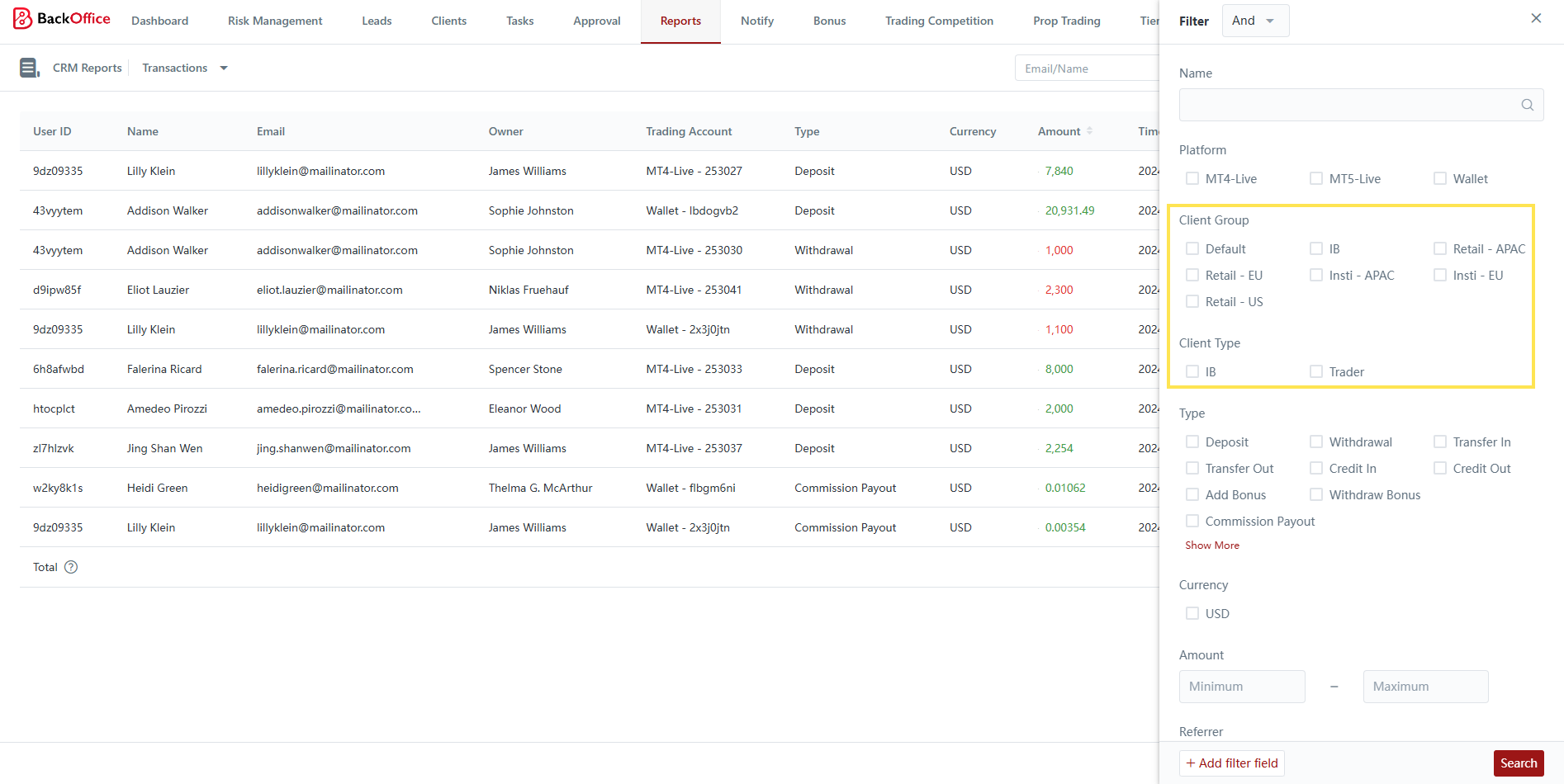
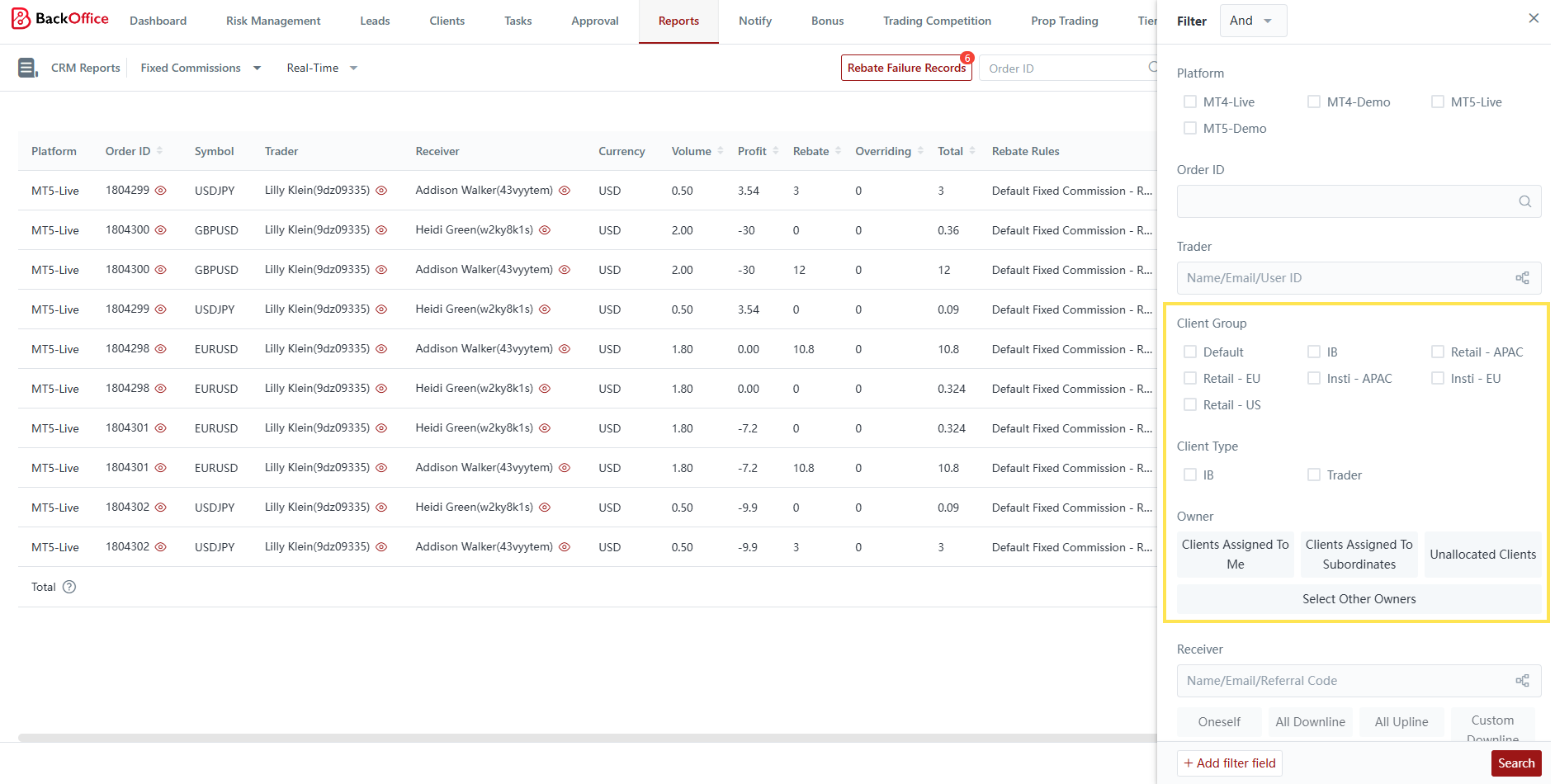
2. **Enhanced Transaction and Commission Report Filters:** Filter reports by client group, client type, and account owner (the assigned sales representative for each lead) for more precise and actionable insights.
3. **Improved Lead Source Filtering:** Enjoy greater flexibility in filtering lead sources, making lead tracking and management more efficient. New filtering options include:
* **Equals:** Display lead sources that exactly match your input.
* **Not Equals:** Exclude lead sources that exactly match your input.
* **Contains:** Show lead sources that include your specified text.
### 1) Client List Sorting
You can now sort your client list by the last updated time, allowing you to easily identify and prioritize clients that require follow-up.
1. To sort by follow-up time, click "Last Follow-Up Time."
2. A down arrow indicates descending order, displaying the most recent follow-up times first.
3. An up arrow indicates ascending order, showing the oldest follow-up times first.
4. To toggle between these orders, simply click "Last Follow-Up Time" again.
### 2) Enhanced Transaction and Commission Report Filters
New filter options have been added to the Transaction Report and Commission Report for more refined data analysis.
1. Transaction Report:
1. Client Group
2. Client Type
2. Commission Report:
1. Client Group
2. Client Type
3. Owner
### 3) Improved Lead Source Filtering
Lead source filtering has been enhanced, allowing you to apply criteria such as equals, not equals, and contains for more flexible data analysis.